Blog
Stop Eating, Start Healing is now live on Amazon.
This is not a diet challenge, a motivational dare, or a promise that fasting is right for everyone. It is a body-literacy guide for adults who want to understand what fasting actually asks of the body before they experiment with longer windows, water fasting, autophagy claims, or cellular-repair language.
The book is built around a simple idea: hunger is not always an emergency, but neither is fasting something to romanticize. A serious reader...
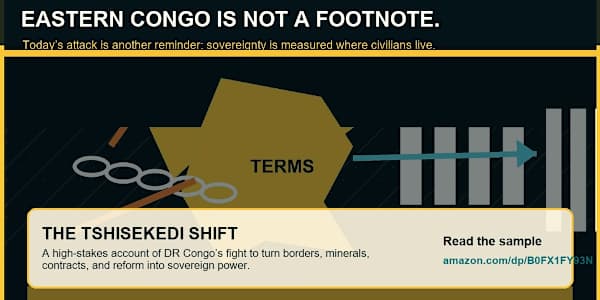
Eastern Congo is often reduced to a paragraph in someone else’s geopolitical story: rebels, minerals, corridors, peace talks, foreign investors, regional armies, and humanitarian warnings.
But the people living through it are not scenery. The state is not scenery either.
Today’s reported ADF attack near Mambasa is a reminder that Congo’s sovereignty is not an abstract speech from Kinshasa. It is measured in villages, roads, checkpoints, mines, tax receipts, courts, soldiers, borders, and...
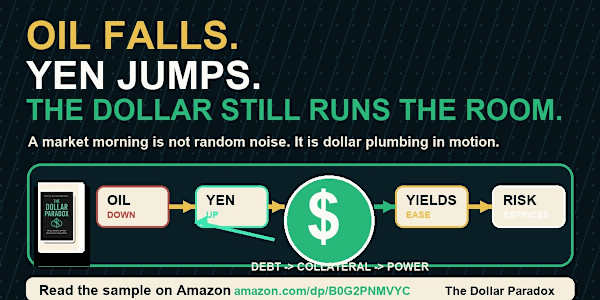
This morning's market board looked scattered at first: oil lower, the yen stronger, U.S. futures higher, Treasury yields softer, and the dollar easing.
But the common thread was not random.
Oil is priced through the dollar. Currency intervention is measured against the dollar. Treasury yields help set the global price of money. When traders reprice war risk, inflation risk, safe-haven demand, and central-bank expectations, they keep returning to the same operating system.
That operating system...
There is a phrase families rarely say out loud:
Some people are loved most when they are still useful.
That sentence sounds harsh until the bills arrive. A grandparent pays for school clothes. A father covers rent again. A mother sends money quietly because she does not want her adult child to feel abandoned. A grandfather says yes because saying no feels like betrayal.
The public data is now catching up to what many families already know. AARP reported this summer that grandparents contribute...
Back-to-school shopping looks like supplies, shoes, backpacks, devices, lunch gear, and the small extras that somehow become urgent.
It is also a live money lesson.
This year, back-to-school reporting and retail surveys are pointing in the same direction: families are under pressure, kids are influencing the cart earlier, and parents are trying to separate needs from wants while prices keep stretching the conversation. Some households will make a clean budget. Others will negotiate in the...
New York's latest tax fight is not only about who pays.
It is about whether a city can tax wealth, manage complexity, preserve trust, and still keep capital emotionally attached to the place that wants more from it.
That is the live question behind the new debate over New York's non-primary residence surcharge, often discussed as a pied-a-terre tax. The city says the policy targets expensive second homes and helps raise revenue for public needs. Homeowners and critics are now focused on the...
Friday gave markets the kind of headline that feels easy to understand: stocks closed higher, a major tech name carried confidence, and the week ended with enough green on the screen to make risk feel respectable again.
But the deeper story was not only in stocks.
It was in the price investors demanded to hold American promises.
That is why the bond market matters. Stock gains can tell you what investors hope will happen. Treasury yields tell you what investors require before they will lend to...
Markets can make a day feel simple.
A big tech rally. A clean headline. A closing-bell story that says risk appetite is back.
But the bond market is usually where the harder question lives. Stocks can celebrate earnings, momentum, or relief. Bonds have to price something colder: trust, inflation, time, and the cost of future promises.
That is why American debt cannot be understood only as a big scary number on a screen. The real question is what kind of debt it is, who needs it, what role it...
Today’s market tape is almost designed for bad takes.
Stocks can rebound after a rough day. A few AI names can turn the mood green. Oil can calm down or flare up. But the more serious signal is often less theatrical: what investors demand to lend long-term to the United States.
That is where the usual household-debt analogy starts to break down.
American debt is not harmless. But it is also not just a family credit-card balance scaled up to Washington. In the dollar system, U.S. debt can...
DR Congo is too often treated as a backdrop: a place where other powers extract, negotiate, finance, report, and decide. The Tshisekedi Shift starts from a different premise: Congo is an actor.
The question is whether minerals can become leverage, contracts can become receipts, and reform can become more than language.
The book follows looting networks, cobalt, copper, Sicomines, customs, energy, food, proxy conflict, institutional reform, and the difficult work of turning national wealth into...
Good intentions are not the same as good outcomes. Institutions can begin with moral language and still grow into systems of management, leverage, dependency, and quiet control.
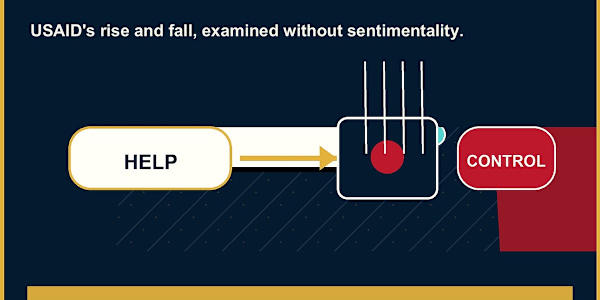
An Autopsy of American Altruism follows USAID through the rise and fall of a particular American promise: that help could be organized, exported, professionalized, and scaled without becoming a form of power.
The book does not treat aid as a cartoon villain or a sacred good. It studies the machinery: bureaucracy, Cold...
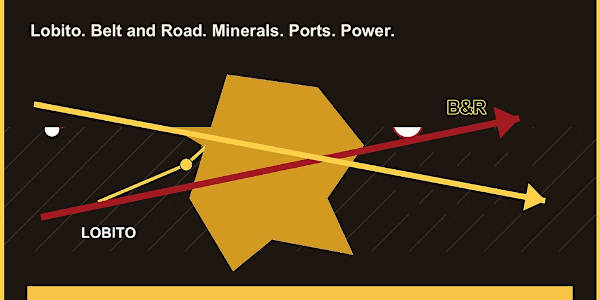
The new scramble for Africa is not only fought in speeches, summits, and flags. It runs through rail lines, ports, minerals, customs routes, debt structures, and the corridors that decide who gets to move value.
Africa's New Scramble: Lobito vs. Belt and Road in the Superpower Showdown treats infrastructure as strategy. A railway is not just a railway when it decides which minerals reach which port, under whose financing, and on whose terms.
The book follows the Lobito Corridor, Belt and Road...
A person can cross a border and discover that the categories around them have changed before anyone explains the rules.
Race and Racism Across the Globe: The Americas looks at that uncomfortable reality across countries, languages, histories, and institutions. The same body can be read differently. The same word can carry different weight. The same family history can be translated, flattened, or misunderstood.
This is not an encyclopedia of every racial system in the hemisphere. It is a decoder...
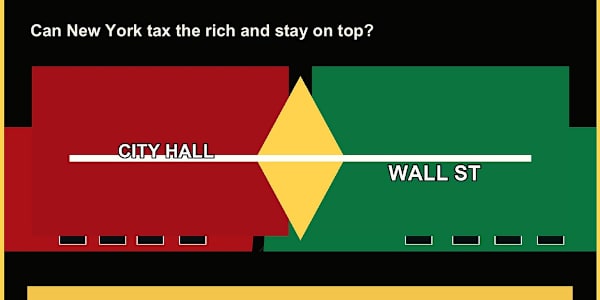
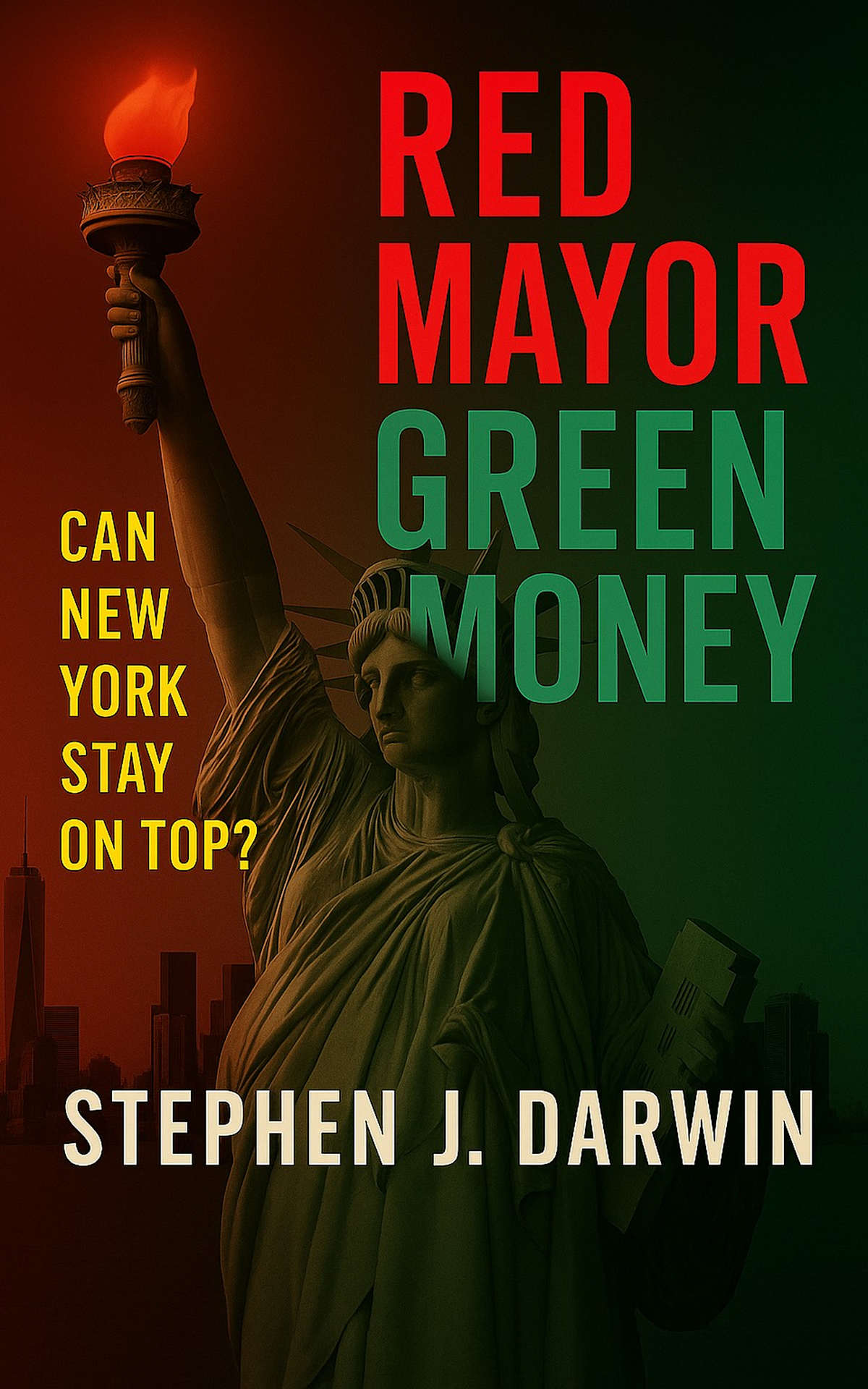
Every global city eventually faces a question it would rather postpone: how much can it demand from capital before capital starts demanding distance?
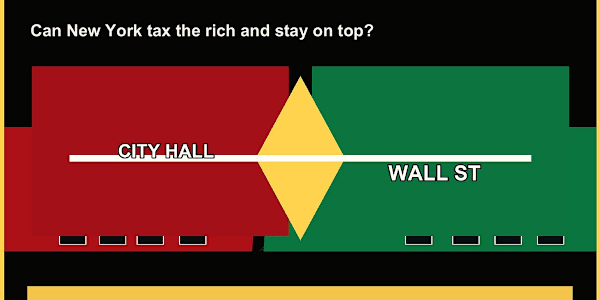
Red Mayor, Green Money imagines that question through New York. A socialist City Hall meets Wall Street's green money, and the fight is not only ideological. It is budgetary, cultural, geographic, and deeply practical.
Housing, taxes, labor, policing, capital flight, public services, migration, and prestige all become part of the same pressure...
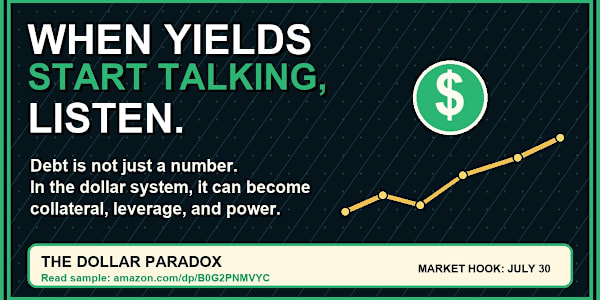
People talk about American debt as if the story has only one ending. The Dollar Paradox starts from a more unsettling question: what if the same borrowing that looks like weakness also helps sustain the system that keeps the dollar powerful?
The point is not to excuse deficits or turn debt into magic. The point is to understand the machine clearly enough to stop mistaking slogans for analysis.
The book explains reserve currency power, global demand for dollars, borrowing, deficits, trust,...
The Walking ATM Myth is for fathers, grandfathers, and adult children caught in the emotional machinery of provision. Money becomes the surface issue, but underneath it are harder questions: love, guilt, silence, gratitude, obligation, and fear of being abandoned once the giving slows down.
This is not a book about becoming cold. It is a book about...
If a child is going to learn money somewhere, make sure the first serious lesson comes from someone who loves them.
Children learn money long before they understand money. They learn from what adults avoid, what families argue about, what friends flex, what games reward, what ads normalize, and what pressure makes feel urgent.
That is why the question is not whether a child will learn money. The question is who gets to teach the lesson first.
I Want to Make Real Money was written for the age...