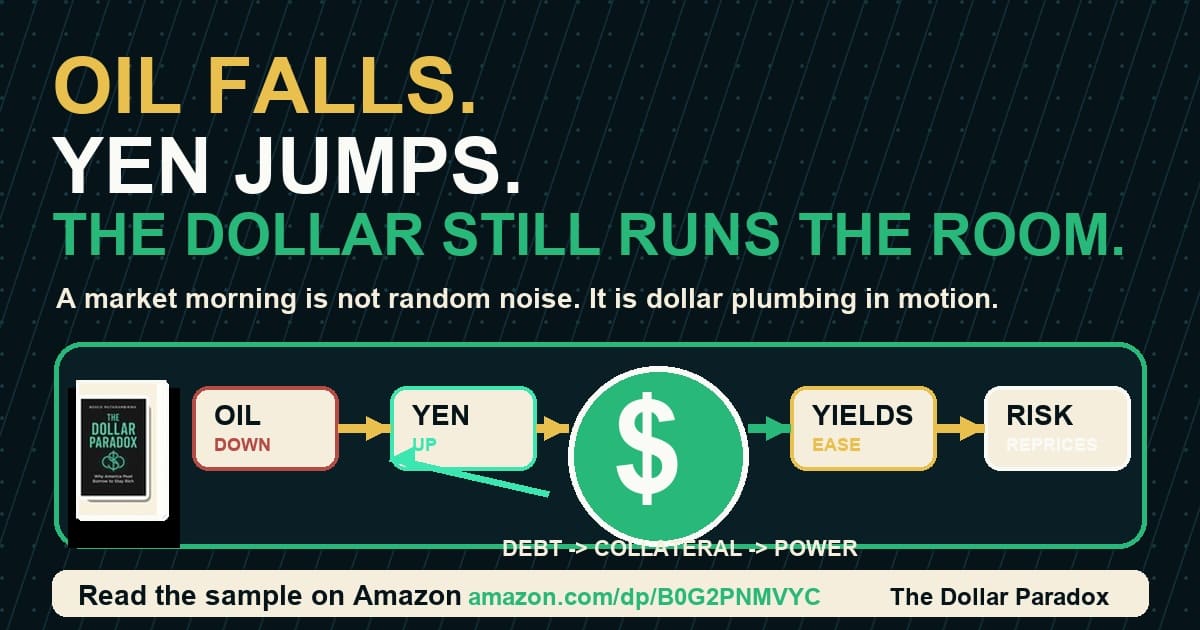
This morning's market board looked scattered at first: oil lower, the yen stronger, U.S. futures higher, Treasury yields softer, and the dollar easing.
But the common thread was not random.
Oil is priced through the dollar. Currency intervention is measured against the dollar. Treasury yields help set the global price of money. When traders reprice war risk, inflation risk, safe-haven demand, and central-bank expectations, they keep returning to the same operating system.
That operating system is the dollar.
This is where The Dollar Paradox begins. A country can look overextended on paper and still sit at the center of the system that prices everyone else's risk. American debt is a liability, yes. But it is also the supply of safe collateral, reserve assets, and financial depth that the world keeps reaching for in moments of uncertainty.
That does not mean the United States gets a free pass forever. It means the usual household-budget metaphor is too shallow. Nations do not borrow like families. Reserve-currency countries do not borrow like ordinary countries. And the dollar does not survive because America is flawless. It survives because the alternatives have to replace not just a currency, but a machine.
When oil falls, the yen jumps, yields move, and risk assets reset before most people finish breakfast, the lesson is simple: the dollar is not just money. It is infrastructure.
If you want a clear, non-jargony explanation of why U.S. borrowing can look like weakness while still helping sustain American financial power, read The Dollar Paradox.
Read the sample on Amazon:
https://www.amazon.com/dp/B0G2PNMVYC
August 3, 2026
The Dollar Still Runs the Room