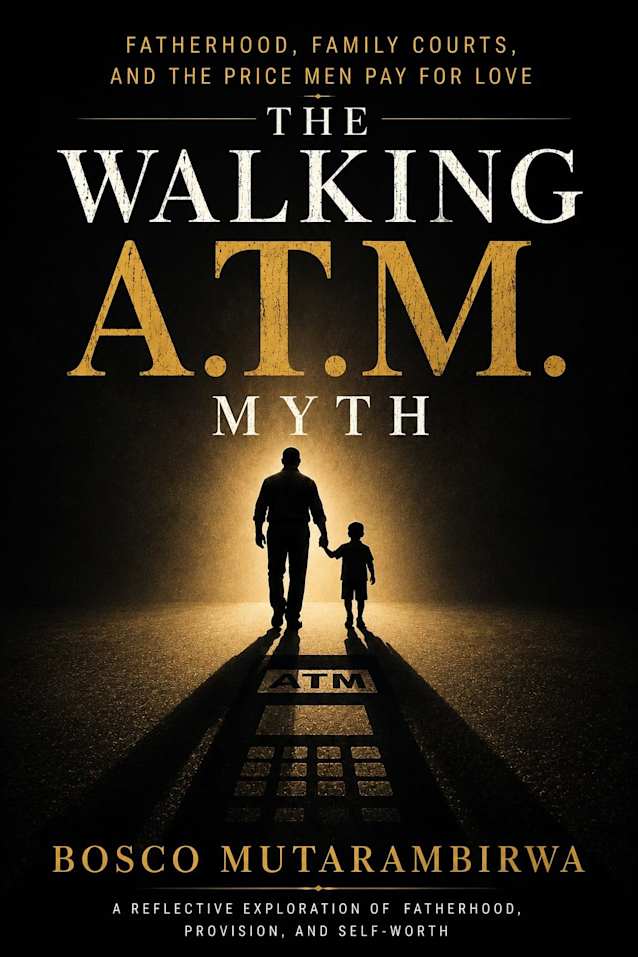
The Walking ATM Myth
About
The Hidden Cost of Being the “Reliable” One
For years, David has been the dependable one.
The provider.
The problem-solver.
The fixer.
The final answer when everyone else is unsure.
He loves his family. He takes pride in being reliable. But over time, a quiet question begins to form beneath the responsibilities:
When did being useful become the same thing as being valued?
In The Walking ATM Myth, Bosco Mutarambirwa uses a fictionalized case study to examine how responsible fathers can slowly become emotional infrastructure inside the family system—not because they care too little, but because they care deeply.
This is a reflective nonfiction book about fatherhood, provision, identity, guilt, boundaries, and the emotional cost of being needed all the time. With compassion and clarity, it explores how the provider role can expand until a father begins to feel measured mainly by what he can fix, finance, solve, absorb, or carry.
In this book, you will explore:
The ATM Dynamic: How the provider role can shift from loving contribution to assumed infrastructure.
Boundary Architecture: Why saying no can feel like guilt, even when the boundary is reasonable.
Identity Reconstruction: How fathers can reclaim value beyond usefulness, provision, and constant availability.
The Difference Between Need and Love: Why being needed can create connection, but cannot define worth.
For fathers who feel invisible behind the role, for families who want to understand the silent weight responsible men often carry, and for anyone who has ever confused usefulness with value, The Walking ATM Myth offers a clear and compassionate way forward.
A father’s value has never been limited to what he provides.
Ready to understand the hidden systems behind responsibility, provision, and family expectations? Scroll up and click Buy Now to start reading today.