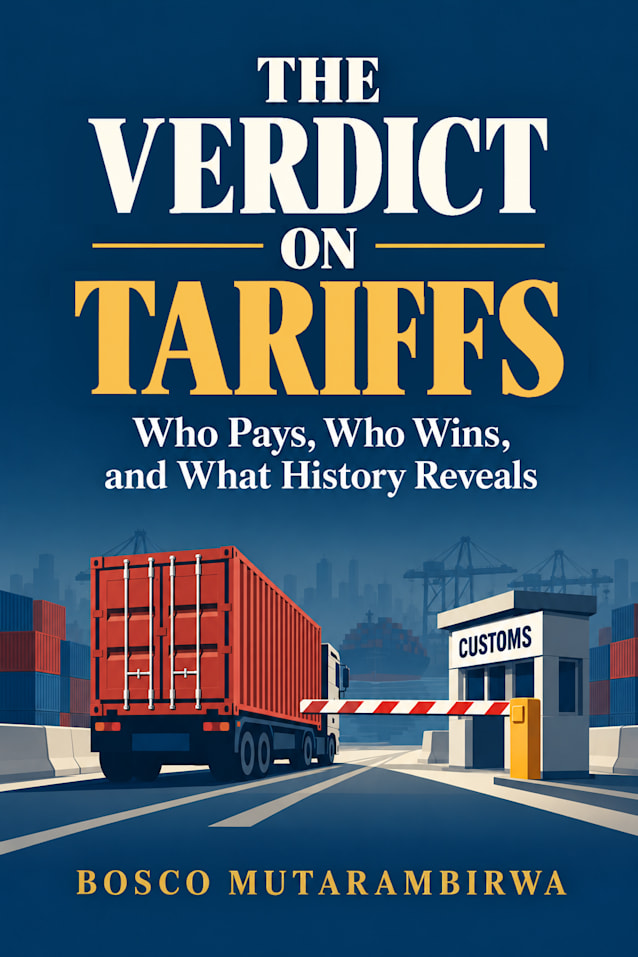
THE VERDICT ON TARIFFS
About
Most arguments about tariffs are slogans.
One side says Americans pay them. The other says they rebuild industry and punish unfair trade. Both can be true. Neither is a verdict.
The real question is simple: Does the tariff work?
That requires asking:
- What is the tariff for?
- Who really pays after prices and exchange rates adjust?
- Who gains capacity or leverage, and who loses?
- How long does the adjustment take?
- What happens when other countries retaliate or find another way in?
- Was there a better option?
The Verdict on Tariffs applies a practical Calibration Test to the evidence, examining objectives, domestic capacity, substitution, consumer and producer costs, retaliation, enforcement, fiscal effects, investment, macroeconomic consequences, and the conditions for ending or changing a tariff.
History supplies the evidence: nineteenth-century American protection, Smoot-Hawley, the postwar free-trade bargain, Japan and Korea's export-driven industrial strategies, China's rise, Europe's barriers, and modern U.S. tariff experiments.
No slogans. No automatic conclusions. No free passes.
A tariff succeeds only if it advances a clear national objective better than the realistic alternatives, at a cost the country can justify, with evidence strong enough to keep it.
By the end, readers will have a practical framework for judging the next tariff proposal before politicians, pundits, or headlines tell them what to think.
For readers who want evidence instead of slogans.