A global conversation about racism starts with a local question: do the categories you know explain the country you are looking at?
The United Nations has scheduled a high-level meeting for September 28, 2026, marking the twenty-fifth anniversary of the Durban Declaration and Programme of Action. Before following the discussion, it is worth asking how easily we mistake one country's experience for everyone's.
Start with the institution, not just the label
A familiar word can conceal an unfamiliar system. Ask who supplies a category, whether people can identify themselves, and what practical difference the classification makes. A school form, a hiring decision, and a border document do not necessarily use identity in the same way.
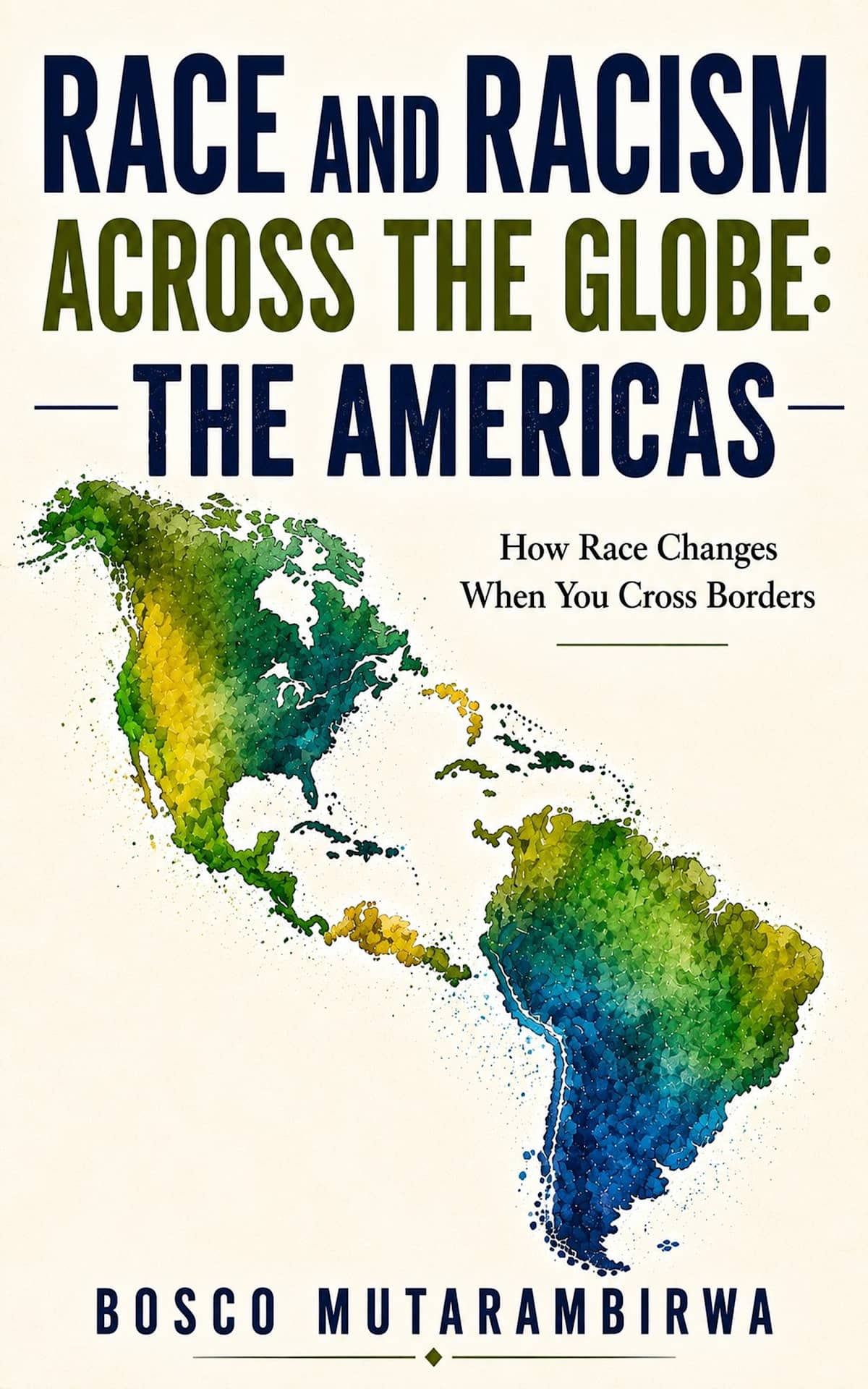
Bosco Mutarambirwa examines those distinctions in Race and Racism Across the Globe: The Americas. The book compares the United States, Brazil, Canada, Mexico, the Dominican Republic and Haiti, Colombia, Argentina, and the wider hemisphere. Its argument is not that history stops mattering when someone travels. It is that shared histories have not produced identical systems.
Comparison without shortcuts
One of the book's most useful cautions concerns recognition. Being counted or named can matter greatly, but it does not tell us everything about protection, opportunity, or authority. That is a question to investigate, not a verdict to impose on every institution.
Another concerns translation. The book explains why terms such as pardo, mestizo, Indigenous, and Latino cannot simply be dropped into another country's vocabulary without losing context. It treats these differences as a reason to listen more carefully, not as permission to minimize discrimination.
Read alongside the coming discussion
This is a comparative nonfiction guide, not an account of tomorrow's meeting or an endorsement of its participants. Some illustrative scenes are composites, as the manuscript explains. The value for a reader is a set of questions to take into international news, travel, study, and everyday conversation.
If you have ever wondered why an identity label changes meaning across a border, start with the Amazon sample. Then decide whether this is the book you want beside you as the discussion develops. Read the sample or buy:
https://www.amazon.com/dp/B0H8XRZL7B
Book details and other editions:
https://darwinpublications.com/books/race-and-racism-across-the-globe-the-americas?utm_source=darwin_updates&utm_medium=article&utm_campaign=20260927_racial_maps
Already read it? Please help other readers choose by leaving an honest review:
https://www.amazon.com/review/review-your-purchases/?asin=B0H956W1WK
Darwin Publications publishes this book. It is educational and reflective reading, not professional advice. No UN endorsement is implied.
Official event information:
https://www.un.org/sw/civil-society/un-high-level-meeting-durban-declaration-25th-anniversary
September 27, 2026
Before the Durban Anniversary: Why Race Needs More Than One National Map